Red
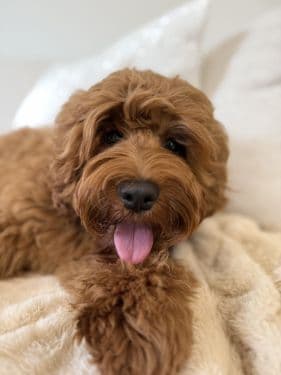
01A solid red color. Nose will be black.

A visual guide to the most common coat colors and patterns, plus a note on how size works in this breed. We breed for temperament and health first — gorgeous colors and dreamy coats are bonus traits.
This page is meant to serve as a general guide to the most common Australian Labradoodle coat colors and patterns. There are many colors, patterns, and variations that exist — and it's not uncommon to see white spots or white hairs emerge throughout a coat, catching light and creating unique flashy patterns or shading variances.
We breed for temperament and health first. Gorgeous colors and dreamy coat textures are just bonus traits. We love them all — and we hope you will too.
A solid red color. Nose will be black.
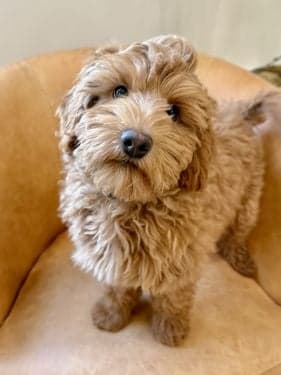
A rich red-tinted gold color. Nose will be black.

A rich, solid gold color. Nose will be brown.
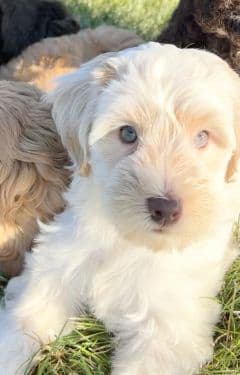
A creamy color with a caramel or apricot tint. Cream dogs with brown noses are sometimes called Caramel Cream.
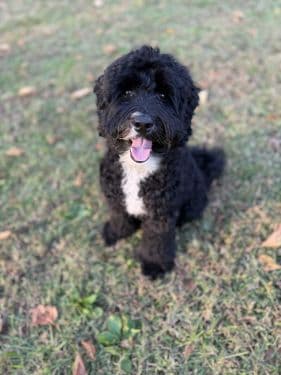
A solid black color. Nose will be black. White markings may be present.

A rich, dark brown color. Nose will be brown.
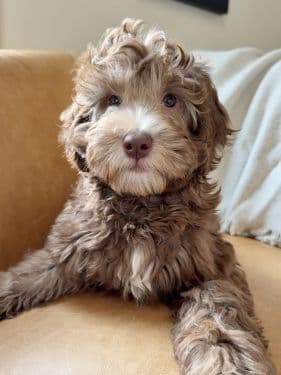
Lighter than chocolate — more of a milk-chocolate color. Nose will be brown.
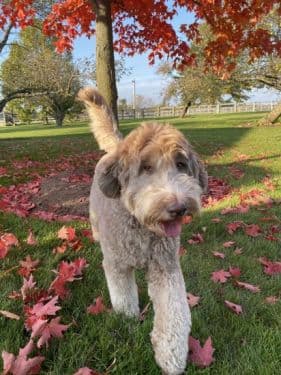
A smoky lavender-chocolate color. Lavender dogs are born chocolate and develop over their first 1–3 years. Nose will be brown.
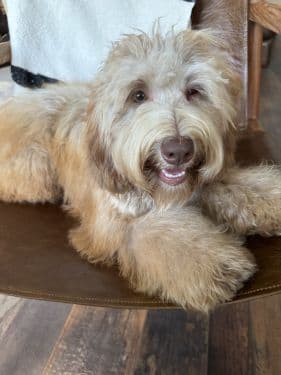
A creamy, cool-toned beige/chocolate. Parchment dogs are born milk-chocolate and develop over their first 1–3 years. Nose will be brown.
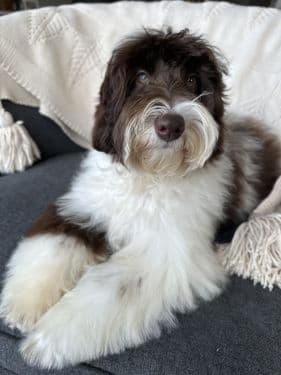
At least 50% of the coat is white, with spots or patches of any solid color above. Nose color follows the colored portion.
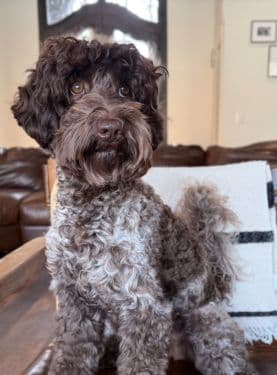
A darker solid color mixed into the white portions of the coat. Roan parts may appear white early on and darken with age.
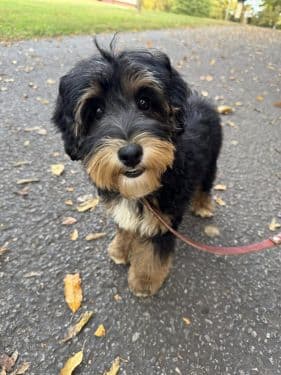
A solid base color (usually chocolate or black) with sharply defined tan markings — above each eye, on the muzzle, throat, forechest, legs, feet, and below the tail.
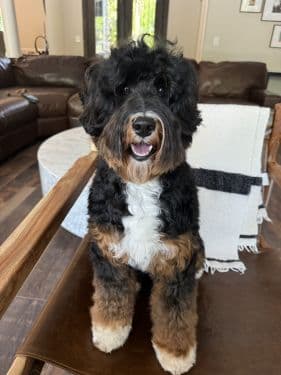
A base color (usually chocolate or black) with markings in two additional colors — typically tan and white. Similar to a Phantom.
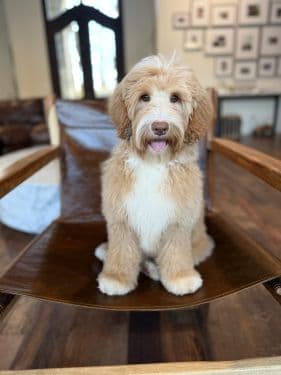
A solid base color with white markings clearly defined as a bib on the chest, sometimes wrapping the neck. Belly, legs, and paws can also be white.
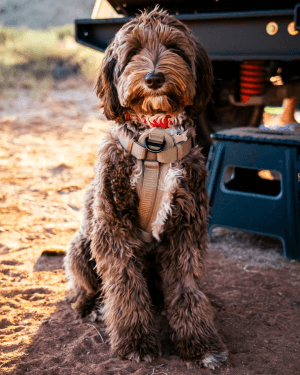
Black-tipped hairs over any of the solid colors above.
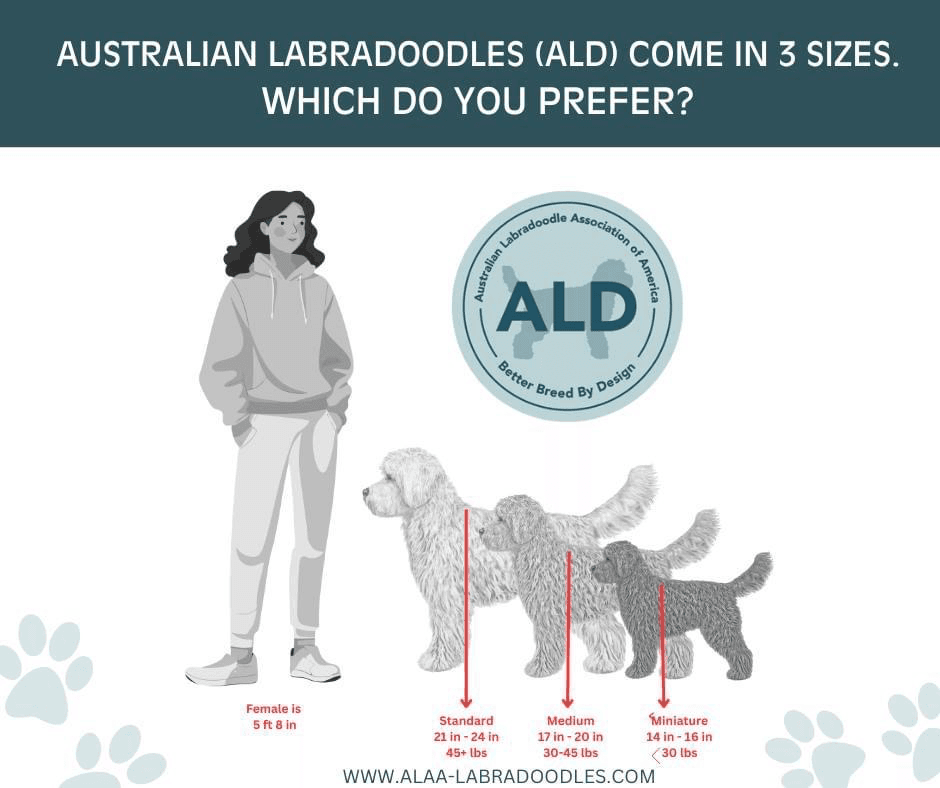
There's a range in weight for each height, depending on the build of each dog. Some are lighter on their feet; others a little more solid. There are no definite outcomes on how every dog will develop — but most of our litters will be full-grown between 25–40 lbs. Height tends to land between mini and medium, since most of our parent dogs are between the large end of mini and an average medium.
Size depends on the combination of genes each dog inherits. Just like children born to the same parents, the weight and height of puppies born to the same parents can differ. The good news: they're all amazing dogs — because Australian Labradoodle breeding has been responsibly handled across many generations.
If you're thinking about a service animal whose work requires a specific height, please ask. We can usually narrow down expected height and weight for a specific litter.
Best Life Labradoodles is an accredited member of the world's top Australian Labradoodle associations. Click any seal to verify our membership.